Case law
Edouard Tricaud
Lawyer · Restructuring
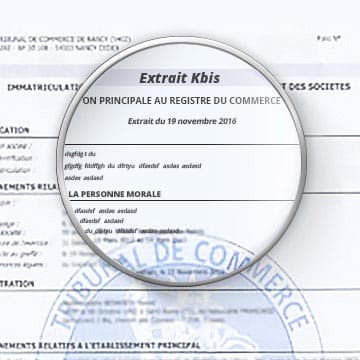
🚨*The chief executive officer (directeur général) whose name appears on the K-bis extract of an SAS is not necessarily the company’s legal representative vis-à-vis third parties.*🚨💡 As a matter of principle, it is the president of an SAS who represents the company vis-à-vis third parties. It nonetheless remains possible to appoint another person, such as a chief executive officer or a deputy chief executive officer, to represent the company (_Article L.227-6 of the Commercial Code_).⚖️ The Commercial Division, in a judgment of 21 June 2011 (_no. 10-20.878_), had already specified that they may represent the SAS only if a clause in the articles of association so provides. 👉🏻 In the present case, during a visit authorised by an order of the liberty and custody judge, the customs administration refused to hand a copy of the order to the chief executive officer of the SAS, even though he was the only person present on site and his name appeared on the company’s K-bis extract. ⛔️ The Court of Appeal, relying on the K-bis extract, annulled the visit, holding that the order should have been handed to the chief executive officer in his capacity as legal representative. ✅ The Cour de cassation logically overturned that decision by a judgment of the Commercial Division of 25 May 2022 (no. 20-21.460): *the K-bis extract of an SAS does not prove that its chief executive officer may represent it vis-à-vis third parties; that power must be expressly conferred on him by the articles of association.*💁♂️ On account of the enhanced protection of third parties and the risk of confusion, it is advisable not to use the titles _chief executive officer_ or _deputy chief executive officer_ where the role of these officers is limited solely to internal acts of management.
→ Read also